

Agency Disputes: Commercial Agents’ Rights under the 1993 Regulations
The Commercial Agents Regulations 1993 catch businesses out more often than almost any other set of rules. A supplier ends an agency on the notice its contract allows, and receives a claim it never agreed to and cannot find in its written terms. The claim is usually good.
This article explains who qualifies as a commercial agent, how compensation and indemnity differ, and the one-year deadline that ends most claims.

Penalty clauses in commercial contracts
English law gives commercial parties wide latitude to decide in advance what should happen if one of them fails to perform, but that latitude has limits. A provision that punishes, rather than proportionately protects a legitimate commercial interest, will not be enforced, whatever it is called.
In this article we look at the modern proportionality test established in Cavendish Square Holding BV v El Makdessi, why the rule bites only on secondary obligations, the warning signs that push a clause into penal territory, and what all of this means for drafting.
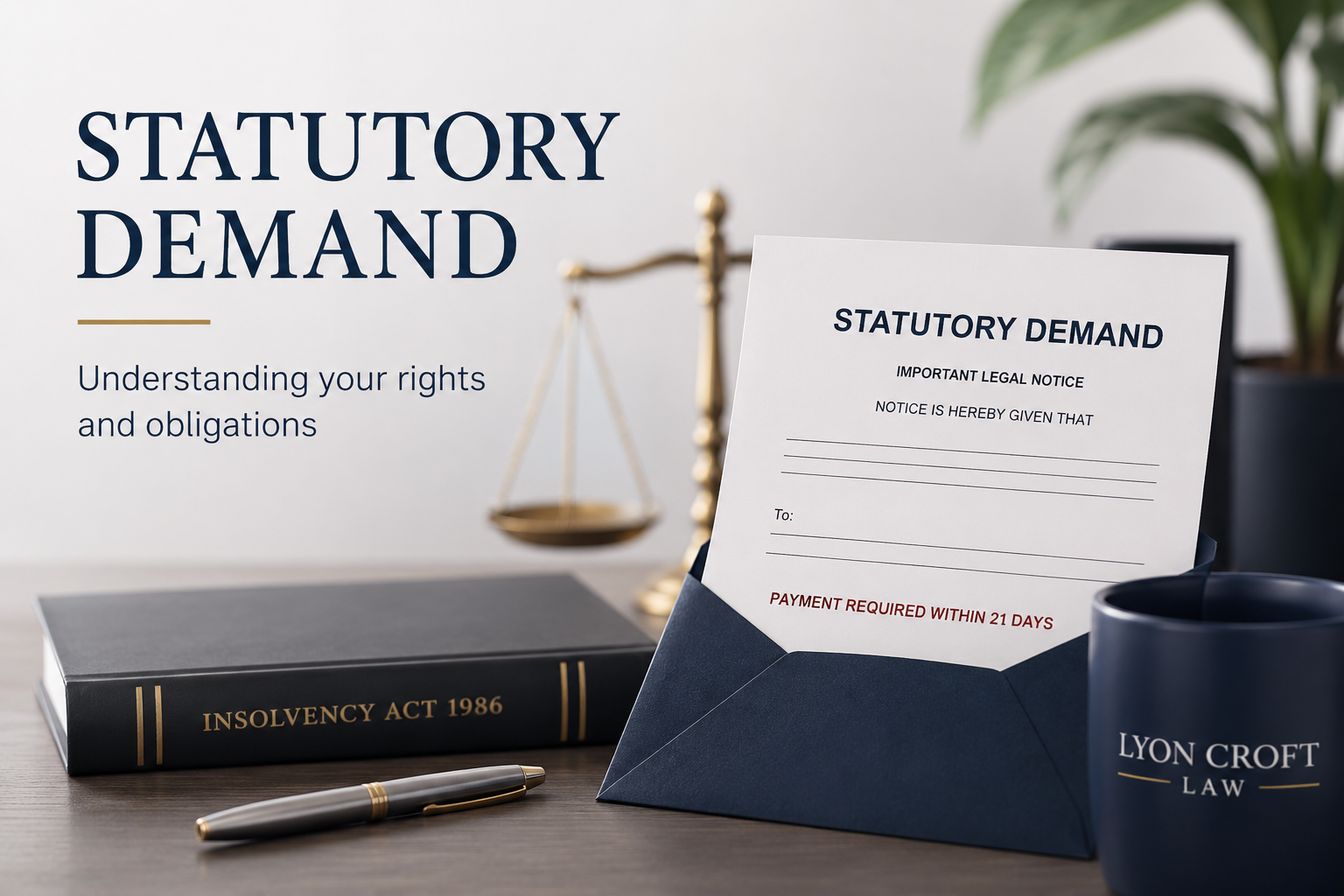
Statutory Demands: The 21-Day Demand for Undisputed Debts Over £750
Owed money by a company that won't pay? For an undisputed debt over £750, a statutory demand puts the debtor on a strict 21-day clock to pay, agree terms, or face a winding-up petition. This article explores a statutory demand as a tool.

Civil Fraud and Asset Recovery
How victims of fraud can secure and recover their assets: freezing injunctions, tracing misappropriated funds, and why speed is decisive.
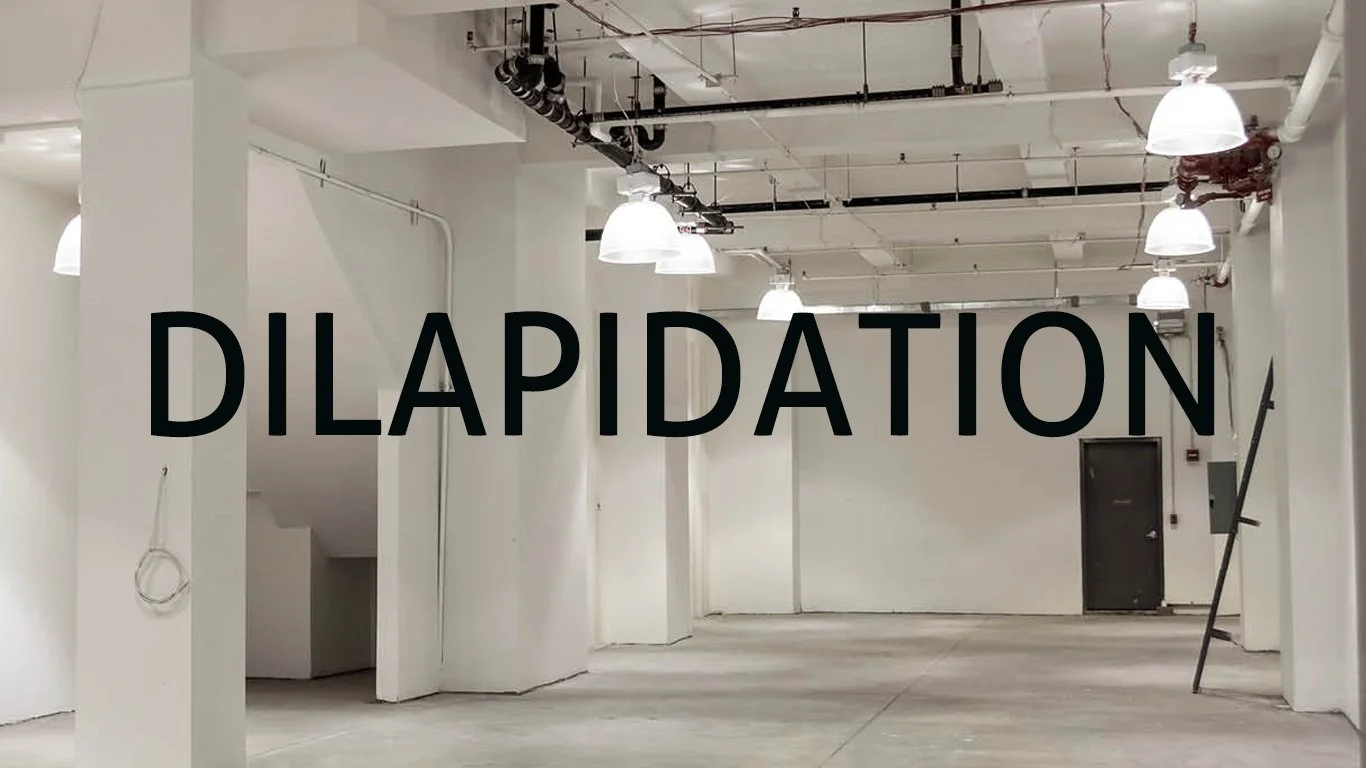
Commercial Dilapidations in London: What Landlords Get Wrong
Dilapidations are one of the most valuable, and most frequently mishandled, aspects of commercial lease management in London. When a lease ends, a landlord is entitled to compensation if the tenant has not maintained the property as the lease requires. The principle is straightforward, but the execution is where landlords routinely lose ground.
From the Section 18 cap and the timing of the Schedule of Dilapidations through to reinstatement obligations and the RICS Protocol, the same mistakes appear again and again across the London market, from City offices to industrial units in Park Royal. This guide sets out the six errors we see most often, and explains why each one matters.

The UK’s New Late Payment Rules: What London SMEs Need to Do
The UK government has confirmed the biggest overhaul of late payment law in 25 years: a 60-day cap on payment terms, mandatory 8% statutory interest with no contracting out, a 30-day window to dispute invoices, and new fining powers for the Small Business Commissioner. Here's what Park Royal SMEs need to do now to protect cash flow — whether you're chasing late payers or worried about being one.

Agreement Without Reliance: The Limits of Constructive Trusts
Can a family agreement, made around a table and never written down, change who really owns the family home? The High Court's decision in Uddin v Uddin [2026] EWHC 150 (Ch) revisits this familiar question and offers an important reminder of the limits of the common intention constructive trust.
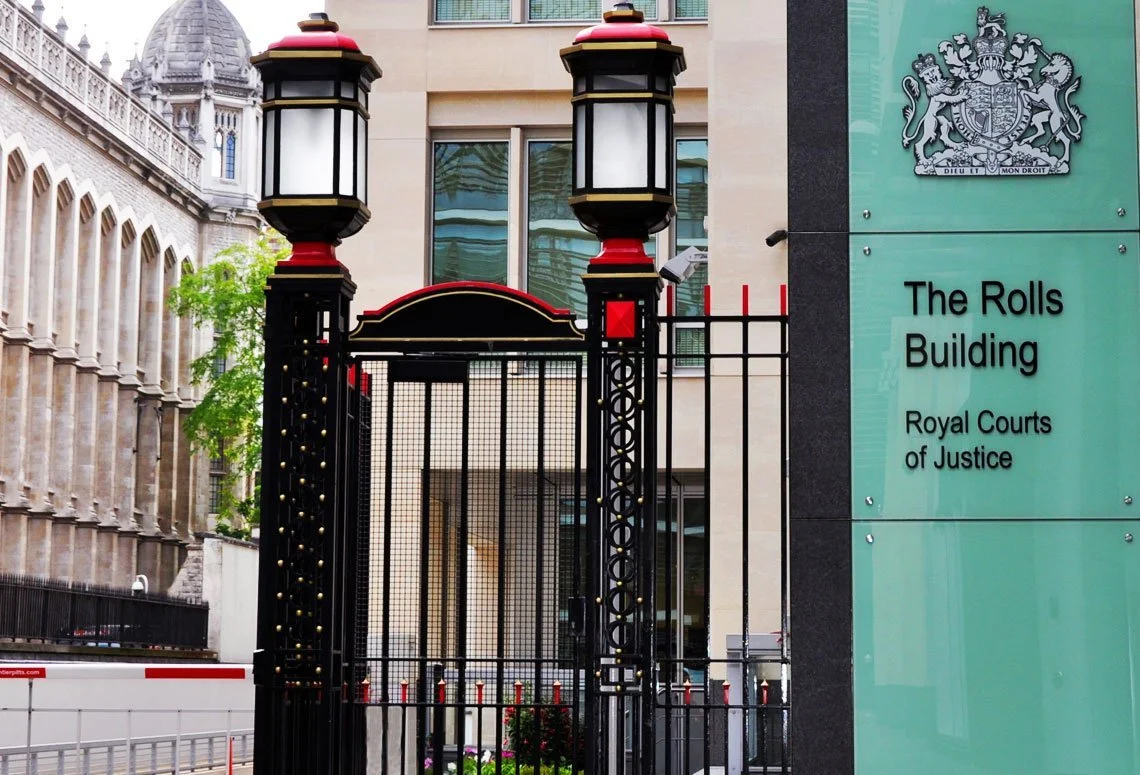
High Court Win: Lyon Croft Law Successfully Defeats Application for Interim Prohibitory and Mandatory Injunctions
High Court Win: Lyon Croft Law Defeats Application for Interim Injunctions
Acting for the Respondent, Lyon Croft Law successfully resisted an application for both mandatory and prohibitory interim injunctions before the High Court of Justice in the Rolls Building, London. The dispute concerned an alleged breach of a commercial supply contract and exclusive distribution rights in Italy. Applying the principles in American Cyanamid, the Judge dismissed the application in full — finding no high degree of assurance for the mandatory injunction, an inadequate cross-undertaking in damages for the prohibitory injunction, and that the relief sought was impractical and went beyond the terms of the contract itself.

Cross-Border Contracts: What UK Companies Must Know
This article explains the key legal risks UK companies face in international agreements and outlines practical steps, under English law, to structure cross-border contracts properly and protect commercial interests.

Shareholder Agreements: Why Every Company Needs One
A professionally drafted shareholder agreement protects control, regulates share transfers and prevents costly disputes. For companies in London and the UK, it provides clarity, minority protection and long-term commercial stability.

High Court Clarifies When Proceedings Are “Brought” for Limitation Purposes
The High Court confirms that a claim is only “brought” for limitation purposes when validly issued in accordance with mandatory electronic filing rules, and considers the point on the Court’s power to remedy procedural errors.

What Are Your Rights in a Shareholder Dispute?
Shareholder disputes often arise over control, dividends, dilution or exclusion from management. Your rights will depend on the company’s articles, any shareholders’ agreement and statutory protections under the Companies Act 2006.

Winding-Up Petitions: Guidance for Companies
A winding-up petition is a formal court application seeking the compulsory liquidation of a company. It often follows the non-payment of a statutory demand and engages a defined insolvency process under the Insolvency Act 1986. This article explains how the process works, from statutory demand to petition and court hearing, and outlines the procedural options available to companies at each stage.

The Hidden Risks of Terminating Supply Contracts
The Court of Appeal has considered the termination of a Covid-era supply contract for face masks, examining how wrongful termination, affirmation and ongoing performance obligations interact in high-pressure commercial arrangements. The decision offers important guidance on termination rights, delivery obligations and the risks of keeping a contract alive after an attempted repudiation, with clear lessons for businesses operating in manufacturing, logistics and supply chains.

Wrongful Trading and Directors’ Personal Liability
Wrongful trading arises where a company continues to trade at a point when its directors knew, or ought to have known, that there was no reasonable prospect of avoiding insolvent liquidation. Governed by section 214 of the Insolvency Act 1986, wrongful trading can expose directors to personal financial liability for losses caused to creditors. This article explains when trading becomes wrongful, who may bring a claim, and the consequences for directors facing insolvency proceedings.

Breach of Contract: What remedies are available?
When a contract is breached, the key question is rarely whether the law provides a remedy, it is which remedy actually works in practice. This article explains the main remedies available for breach of contract, including damages, termination, and court-ordered relief, and highlights the strategic considerations that often determine whether a claim delivers a meaningful commercial outcome.

HMRC v Purity Limited: Public Interest Winding-Up Powers Put to Work
In HMRC v Purity Limited, the High Court confirmed that HMRC can shut down businesses promoting tax avoidance arrangements without first proving a loss to the public revenue. This decision has significant implications for directors, umbrella companies, and businesses operating complex remuneration or tax structures. Our article explains the ruling and, more importantly, what it means in practice for businesses seeking to manage risk and stay compliant.

How to legally terminate a contract
Contracts don’t end just because a relationship breaks down. Terminating a contract without the right legal basis can create more risk than the original dispute. This guide explains when a contract can lawfully be brought to an end, how breach and repudiation fit into that analysis, and why getting the route to termination right matters.

Renters’ Rights Act 2025
The Renters’ Rights Act 2025 introduces the most significant reform of the private rented sector in a generation. With the abolition of section 21, strengthened possession grounds, new tenant protections, and expanded enforcement powers for local authorities, landlords and agents will need to reassess how properties are let, managed, and enforced. This overview sets out the key changes, critical implementation dates, and the practical implications for those operating in the London rental market.

When Freezing Orders Fall
Freezing injunctions are among the most powerful tools available in commercial litigation, but their effectiveness depends entirely on procedure and jurisdiction. In Bharucha v Patel & Anor, the High Court examined what happens when interim relief collides with an enforceable arbitration clause. The decision offers important guidance on when freezing orders can be maintained, when they must fall away, and how early procedural choices can determine whether asset preservation survives at all.