
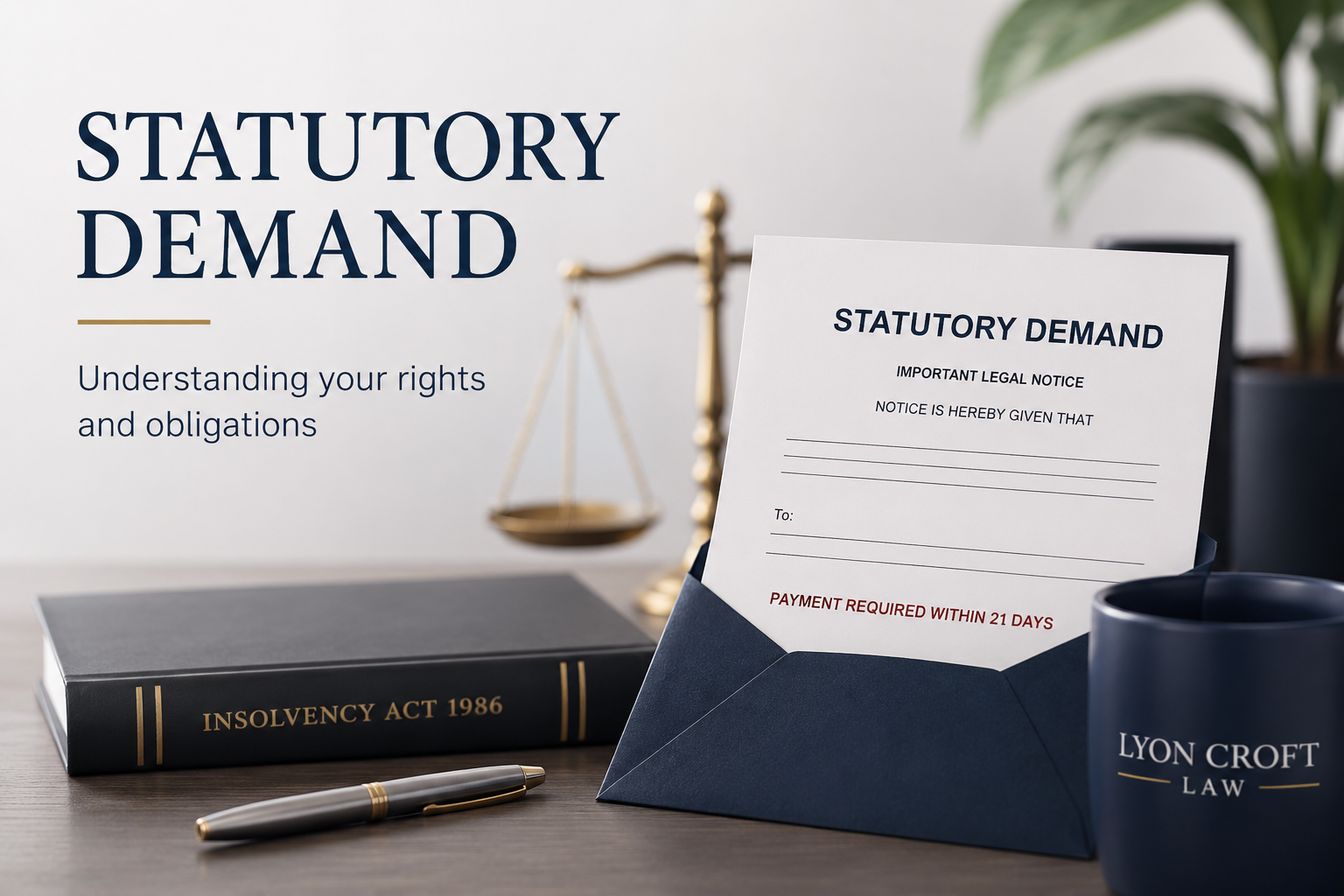
Statutory Demands: The 21-Day Demand for Undisputed Debts Over £750
Owed money by a company that won't pay? For an undisputed debt over £750, a statutory demand puts the debtor on a strict 21-day clock to pay, agree terms, or face a winding-up petition. This article explores a statutory demand as a tool.

Winding-Up Petitions: Guidance for Companies
A winding-up petition is a formal court application seeking the compulsory liquidation of a company. It often follows the non-payment of a statutory demand and engages a defined insolvency process under the Insolvency Act 1986. This article explains how the process works, from statutory demand to petition and court hearing, and outlines the procedural options available to companies at each stage.

Wrongful Trading and Directors’ Personal Liability
Wrongful trading arises where a company continues to trade at a point when its directors knew, or ought to have known, that there was no reasonable prospect of avoiding insolvent liquidation. Governed by section 214 of the Insolvency Act 1986, wrongful trading can expose directors to personal financial liability for losses caused to creditors. This article explains when trading becomes wrongful, who may bring a claim, and the consequences for directors facing insolvency proceedings.

Winding Up Proceedings Explained
Winding up proceedings are one of the most powerful tools available to creditors—but only when used strategically. This insight explains how statutory demands and winding up petitions work, when they are appropriate, and how a measured, commercially focused approach can help secure payment while avoiding unnecessary legal cost and risk.

A Guide to Corporate Debt Recovery
This article explains how corporate debt recovery works in practice, from secured and unsecured debts to enforcement, charging orders, and insolvency proceedings. We set out a clear, cost-conscious approach to recovering payment efficiently, helping businesses understand their options and avoid unnecessary legal expense.